Why Mercury Retrograde Panic Is a Western Invention and What Indian Astrologers Fear Instead
July 10, 2026
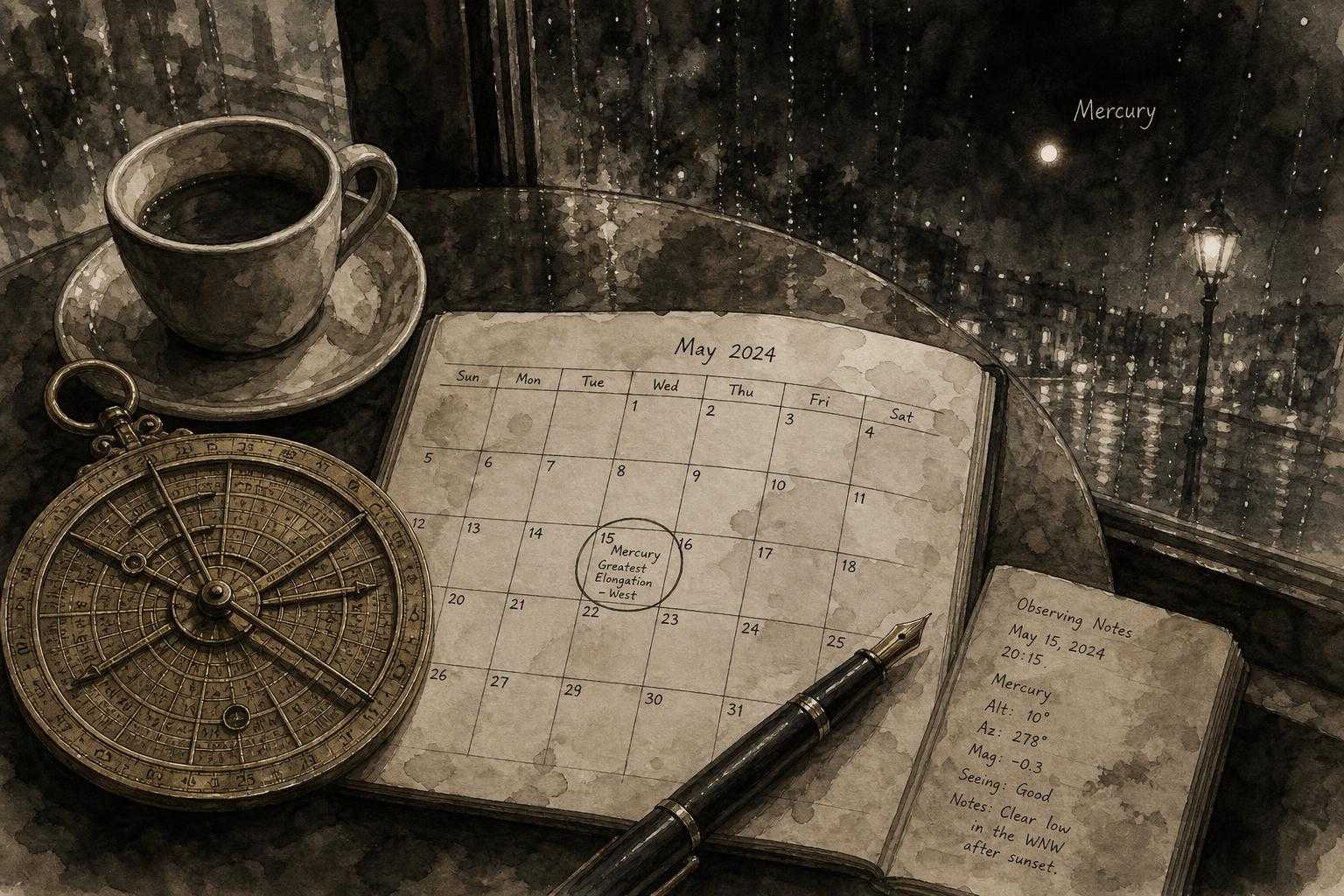
Every time Mercury appears to reverse course, the internet reaches for its emergency kit: do not text your ex, do not buy a laptop, do not sign anything, and perhaps do not operate a toaster until further notice. Mercury retrograde has become astrology's version of the "this is fine" meme, complete with flames, a coffee mug, and a calendar full of allegedly doomed appointments.
But the full-on panic is less an ancient cosmic commandment than a modern pop-astrology habit, shaped largely by Western social-media astrology. Indian astrology, usually called Jyotish or the "science of light," absolutely notices retrograde motion. It simply does not treat every Budha Vakri - retrograde Mercury - like a universal disaster alert.
That is the plot twist: in a traditional Jyotish-style reading, the question is rarely, "Is Mercury retrograde?" It is, "Retrograde where, for whom, under what planetary timing, and connected to which parts of life?" That is a much less viral answer, admittedly. It is also a much more useful one.
Mercury Is Not a Cosmic Villain
In Jyotish, Mercury is Budha, the quick-minded planet linked with language, calculation, trade, learning, analysis, messaging, and the art of noticing what everyone else missed. When Budha is vakri, or apparently moving backward from Earth's viewpoint, the symbolism can become more internal, nonlinear, revising, or intense. That does not automatically mean broken phones and cursed spreadsheets.
In fact, a retrograde planet is often evaluated as having cheshta bala, or motional strength. Strength is not the same as sweetness. A strong Mercury can make someone brilliant at research, sharp in negotiation, relentless in revision, or spectacularly talented at finding a loophole in a 47-page contract. It can also make the mind spin, over-edit, or argue a point like it is auditioning for a courtroom drama. Context is everything.
Think of retrograde Mercury less as "Mercury has left the chat" and more as an edit button with opinions. A delayed email may be annoying. But the revised proposal could be better. The old conversation returning may be awkward. But it may also reveal information you skipped the first time. That is not doom; that is a narrative callback.
Why the Panic Feels So Western
To be clear, Western astrology is not one monolithic thing, and plenty of thoughtful Western astrologers reject retrograde hysteria too. The issue is the modern, snackable version of astrology that needs one transit to explain every glitch in a group chat. Mercury retrograde is frequent, easy to recognize, and perfectly suited to a headline that says, "Do Not Make Any Decisions Until Further Notice."
Jyotish tends to be more chart-specific and timing-specific. A Mercury transit may matter more if it crosses your ascendant, activates your tenth house of career, joins a sensitive natal planet, or arrives during a Mercury dasha. A dasha is a long planetary period used to describe which themes are ripening in a person's life. In other words, the sky is not issuing the same memo to every human with a Wi-Fi password.
If you want to know whether Budha Vakri is actually hitting your chart, check your Mercury house and dasha in a free horoscope before borrowing everyone else's panic.
Your Sun sign is only one note; Moon, Rising, and the rest form the full chord. In Jyotish terms, the Moon sign, ascendant or lagna, house rulerships, lunar mansions called nakshatras, aspects, and current dashas all change the reading. The cosmic playlist is personalized, not a single-song loop called "Mercury Ruined My Tuesday."
What Indian Astrologers Actually Watch More Closely
If Mercury retrograde is not the main scare headline, what tends to get more serious attention in Indian astrology? Usually, it is not one isolated transit. It is a stack of factors.
First: eclipses. Rahu and Ketu, the lunar nodes sometimes called shadow planets, are major characters in Jyotish. Eclipses are often treated as energetically unusual windows, especially when they fall near important natal placements. The concern is less "your package will be delayed" and more "this may stir desire, confusion, endings, revelations, or abrupt shifts in the life area being activated." Rahu can amplify appetite and obsession; Ketu can cut, detach, or spiritualize. Neither is subtle.
Second: Saturn. Shani, or Saturn, is the planet of time, duty, consequences, patience, pressure, and grown-up paperwork. An Indian astrologer may pay close attention when Saturn transits the Moon sign, crosses key natal planets, or activates difficult houses. Sade Sati, the approximately seven-and-a-half-year period around Saturn moving through the sign before, the sign of, and the sign after the natal Moon, gets plenty of attention because it can coincide with responsibility-heavy chapters. But even here, "fear" is too simple. Saturn is often the strict professor, not the cosmic hitman. It asks for structure, honesty, boundaries, and receipts.
Third: dasha timing. This is the big one. A challenging period involving the ruler of the sixth, eighth, or twelfth house can make an astrologer slow down and look carefully at health routines, debts, conflict, uncertainty, rest, foreign travel, or emotional bandwidth. The eighth house is associated with transformation, shared resources, and the things beneath the floorboards. The twelfth house speaks to sleep, solitude, expenses, retreat, and release. These are not bad houses; they are deep-water houses. You bring a flashlight, not a panic button.
Fourth: afflicted key planets. A weak or pressured Moon may suggest emotional strain. A badly supported Mars may point to impatience or conflict. A troubled Venus can complicate pleasure, money, or relationships. Yet Jyotish does not read placements as permanent verdicts. It reads patterns, choices, seasons, and possible ways to respond.
The Real Lesson: Stop Reading Astrology Like a Fire Alarm
Mercury retrograde can still be a useful cue to slow down, proofread, back up your files, and avoid sending the paragraph that begins, "No offense, but." Those are excellent life skills in every season. But the panic becomes silly when people surrender all agency to an apparent shift in planetary motion.
A practical Jyotish approach asks: What house is Mercury moving through from my ascendant and Moon? What does Mercury rule in my chart? Is a Mercury dasha or sub-period active? Is this transit touching my natal Mercury, Moon, or career axis? And, perhaps most importantly, what am I being asked to revise with more intelligence?
The answer may be mundane: update the budget, reread the contract, organize the inbox, call your sibling back. The cosmos has a dramatic aesthetic, but personal growth is often aggressively unglamorous.
Three No-Panic Practices for Budha Vakri
-
Do a Wednesday mind sweep. Mercury's traditional weekday is Wednesday. Spend 20 minutes clearing one communication backlog: unanswered messages, messy notes, an outdated resume, or the twelve browser tabs that have become a small republic.
-
Journal the revision, not the disaster. Ask: "What idea, agreement, or story about myself needs a second draft?" Retrograde symbolism is excellent for reconsideration when you use it intentionally.
-
Make a tiny Mercury remedy practical. Wear something green if it makes you feel focused, donate school supplies, help someone learn a skill, or speak with extra precision for one day. The remedy is not a bribe for the universe; it is a behavioral reset.
Mercury retrograde is not a cosmic cancellation notice. In the Jyotish lane, it is one detail in a large, intricate chart - more remix than ruin. Save the drama for a true Saturn-and-eclipse plotline, and even then, bring a planner, a sense of humor, and a backup charger.
No one can be defined by just one sign.
See for yourself, with a free horoscope.
Generate a Horoscope