Why AstroTalk, Co-Star, and AI Horoscope Apps Are Booming in 2026 and What It Means for Traditional
May 3, 2026
Astrology is having a very online 2026. AstroTalk is scaling the on-demand consultation model, Co-Star keeps making birth-chart language feel like a group chat with the universe, and a fresh crop of AI horoscope apps is ready to answer, "Why did my manager send that Slack at 4:57 p.m.?" before you have finished stress-eating pretzels. The stars have become searchable, scrollable, subscribable, and occasionally a little too push-notification happy.
The business case is real. Industry forecasts project strong continued growth for astrology apps in 2026, driven by mobile access, freemium subscriptions, personalized content, and AI-powered conversations. AstroTalk has reported rapid revenue growth from its app-led consultation model, while Co-Star combines social features, personalized chart content, and AI-assisted language. In other words: the cosmic marketplace has found its product-market fit.
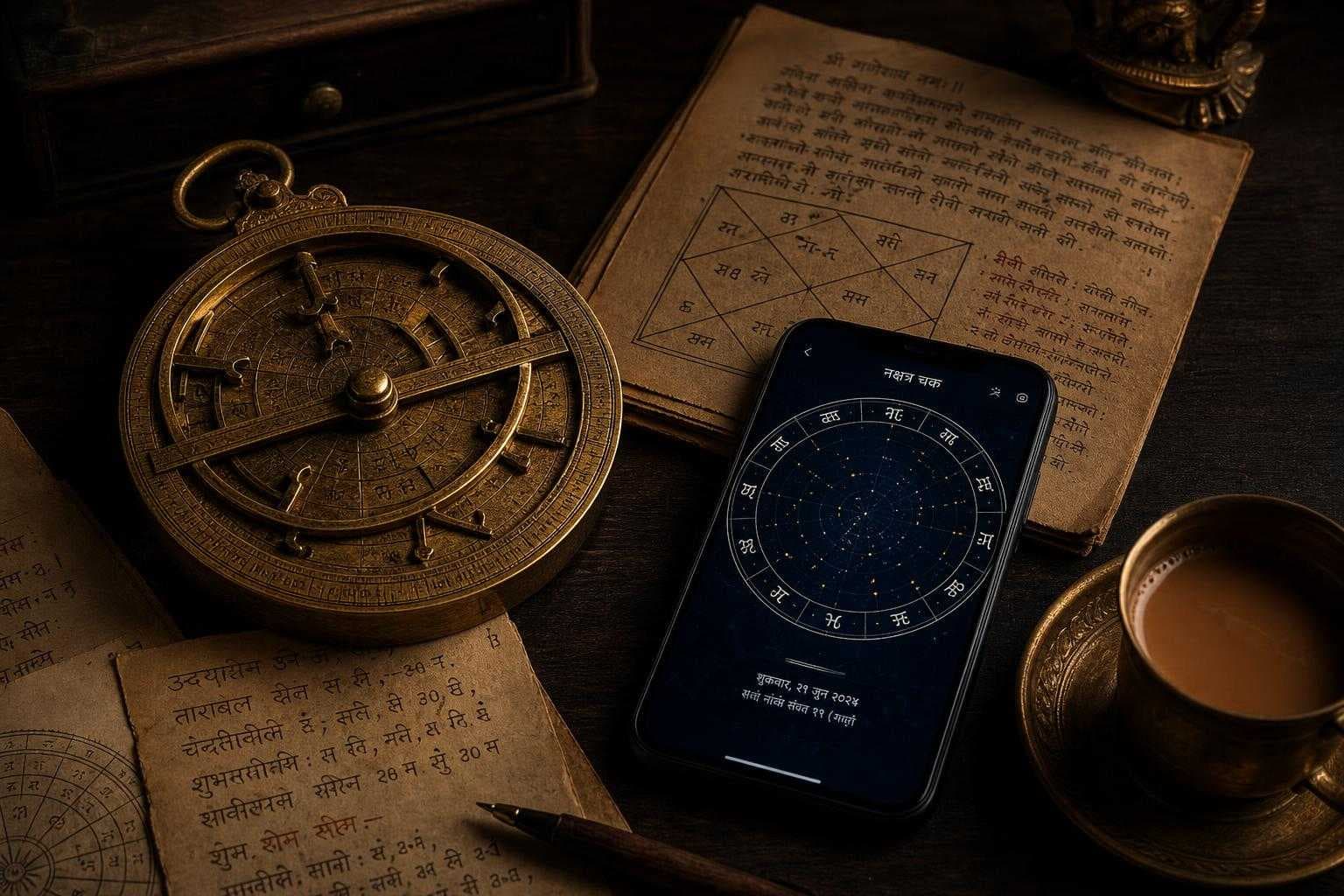
But the bigger question is not whether these apps are booming. It is what happens when an ancient interpretive tradition meets the always-on expectations of the algorithm. For traditional Jyotish, also called Vedic astrology, this is not necessarily an eclipse of the old ways. It could be a major reset in how people enter the tradition, what they expect from it, and where genuine practitioners can shine.
The Real Product Is Not Prediction; It Is Personal Relevance
The secret sauce of the app boom is not that people suddenly want a 40-page technical report on their natal chart. Most users want a quick emotional weather report with enough specificity to feel seen. They want a tiny piece of meaning delivered at the exact moment life gets weird. A horoscope that says "set boundaries" is fine. A message that says "your work-life tension is loud today, so do not volunteer for a task you will resent by dinner" lands like a cosmic read receipt.
Co-Star's model is built around that bite-sized, hyper-personal tone. AstroTalk's appeal is different but equally modern: it turns access to astrologers into an on-demand service, closer to booking a ride or ordering coffee than waiting for the family priest to have an opening. AI horoscope apps go one step further by making astrology conversational. Instead of passively receiving a forecast, users can ask follow-up questions, vent about a situationship, or request a career reading at 1 a.m.
That immediacy fits a world trained by chat interfaces. We are used to asking systems for summaries, recommendations, drafts, playlists, and now cosmic context. The app does not just offer astrology; it offers a ritual of checking in. It is emotional UX with a zodiac skin.
Why 2026 Feels Especially Cosmic
From a Jyotish lens, the boom makes symbolic sense. Technology, networks, analytics, disruption, and mass reach all carry a distinctly Rahu-like flavor. Rahu is the north lunar node in Vedic astrology: the shadow graha, or planetary influence, associated with appetite, amplification, novelty, foreignness, and the seductive glow of the new. If Rahu had a startup pitch deck, it would probably promise infinite personalization and a push notification for every existential crisis.
AI astrology is very Rahu: fast, fascinating, scalable, and sometimes blurry around the edges. It can remix vast amounts of chart symbolism into language that feels personal. Yet Rahu also asks the uncomfortable question: are we getting wisdom, or just more content?
Traditional Jyotish brings in the counterweight. It is not only about sign-based personality labels. A serious reading can examine the lagna, or Rising sign; house rulers; planetary dignity; aspects; divisional charts; nakshatras, the lunar mansions; and dasha, the planetary timing cycle that maps longer chapters of life. That is a very different experience from "Mercury is moody, avoid texts." It is closer to reading a layered, living map.
Before trusting any app's daily alert, pull up your lagna, Moon nakshatra, and dasha in a free horoscope so the quick read has traditional context.
Your Sun sign is only one note; Moon, Rising, and the rest form the full chord.
That sentence is the bridge between app astrology and traditional practice. Apps have taught millions of people that a birth chart exists. Jyotish can teach them how to listen to the whole chord without turning every transit into a five-alarm cosmic emergency.
The Great Opportunity for Traditional Jyotish
The best traditional practitioners do not need to compete by becoming slower, scarier, or more mysterious. They can compete by becoming clearer. A well-trained Jyotishi can explain why two people with the same Sun sign may experience a transit differently. They can distinguish a temporary mood from a major dasha shift. They can say, "This is a period for patience," without pretending the universe has issued a nonrefundable verdict.
Apps are excellent front doors. They lower the intimidation factor, normalize chart vocabulary, and let beginners explore privately. A person who starts with a spicy Co-Star notification may eventually become curious about their Moon's nakshatra. Someone who uses AstroTalk for a quick question may later seek a thoughtful, longer consultation that includes context, ethics, and practical next steps.
For practitioners, that means the premium offering is not merely more prediction. It is discernment. It is helping a client understand tradeoffs, timing, patterns, and agency. It is explaining that a challenging Saturn period does not mean life is cancelled; it may mean the syllabus got serious. Saturn is the cosmic professor who assigns the group project and somehow makes it due before you have located the Google Doc.
The Risks: Convenience Can Flatten the Chart
The boom also has real downsides. AI can sound confident even when its underlying chart calculation, astrological framework, or interpretive logic is weak. Users may not know whether an app is using tropical Western astrology, sidereal Vedic astrology, a mix of systems, or a content engine wearing a starry trench coat. That matters because different systems use different zodiac reference points and techniques.
There is also a privacy issue. Birth date, birth time, location, relationship questions, money worries, and health anxieties can create a remarkably intimate data portrait. Users should read privacy policies, be cautious with payment prompts, and avoid handing over sensitive personal details just because an app sounds empathic. AI can be a reflective tool, but it is not a therapist, financial adviser, doctor, or substitute for urgent help.
Traditional Jyotish has its own responsibility here. Fear-based remedies, absolute predictions, and expensive upsells do not become ethical because they are ancient. The future belongs to astrologers and platforms that are transparent about methods, compassionate about uncertainty, and practical about choice.
What the Next Phase Looks Like
Expect the category to split into lanes. One lane will be entertainment-first: daily vibes, compatibility banter, memes, and shareable cosmic drag sessions. Another will be wellness-adjacent: journaling prompts, reflection tools, and habit tracking. A third will be consultation-led, pairing users with human astrologers. And a fourth will aim for serious study, offering calculators, source-based learning, and detailed chart tools.
The winning Jyotish voices will not reject technology outright. They will use it like a good ephemeris: a tool that saves time while leaving interpretation, ethics, and human presence intact. AI can draft a useful question. It cannot replace the lived wisdom of knowing when a client needs reassurance, when they need a reality check, and when the most helpful cosmic advice is simply, "Drink water, sleep on it, and do not text your ex during a Moon transit."
Three Grounded Ways to Use the Cosmic App Boom
-
Build a two-minute chart-check ritual. Before opening an app reading, write one question: "What decision or feeling am I actually trying to understand?" Compare the answer to your real life, not just the dopamine of being perceived.
-
Learn one Jyotish layer beyond your Sun sign. Start with your Moon sign or Rising sign, then explore your Moon's nakshatra. Keep a journal through one lunar month and note moods, routines, and repeating themes.
-
Use remedies as habits, not panic buttons. For a Saturn-heavy season, try a weekly declutter, a realistic budget check, or service to someone who needs support. For a Moon-heavy day, reduce noise, hydrate, and protect your sleep. The point is participation, not superstition.
The app era is not replacing traditional Jyotish. It is creating millions of new beginners, plus a very loud demand for astrology that feels immediate, personal, and human. The challenge now is to make sure the deeper tradition arrives with them.
No one can be defined by just one sign.
See for yourself, with a free horoscope.
Generate a Horoscope